
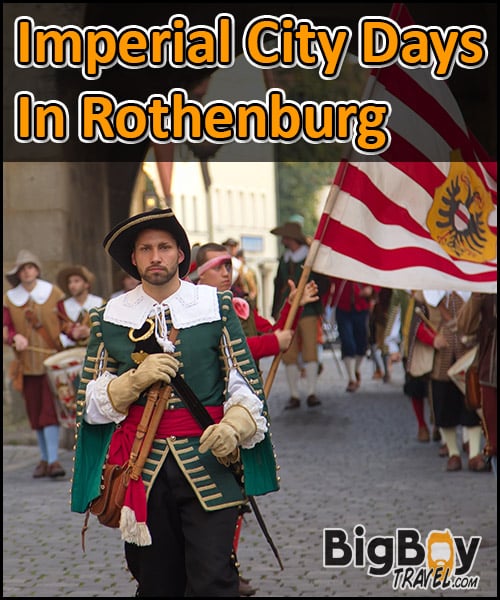
Imperial City Days In Rothenburg:
Rothenburg is beautiful year-round, but during the annual Imperial City Days, the village is at its absolute peak. This isn’t just a festival; it’s a full-scale medieval takeover where knights set up camp in the moats, blacksmiths forge steel in the squares, and the entire town smells of woodsmoke and roasting meats. You’ll be fully immersed in history, traveling back over 750 years from Rothenburg’s imperialization in 1274 until its slumber following the 30 Years’ War. If you want to see the “Golden Age” of this walled city come to life with a level of detail you won’t find anywhere else in Europe, this is the weekend you need to be here.
When Are The Imperial City Days? Always the first weekend in September since 1974.
2026 Event Schedule: September 4th-6th, 2026
•Friday: The festival officially begins with the epic Torchlight Procession Parade (video) in the evening, capped by fireworks in Market Square (though you’ll see reenactors roaming all afternoon!).
•Saturday: An action-packed day featuring morning weapons and cannon demonstrations, living history stations throughout town, and the Knights’ Encampment. The night ends with fireworks over the valley and glowing red flares depicting the “Burning City.”
•Sunday: A slightly quieter day as the festival wraps up, highlighted by a thrilling historical battle reenactment down in the Tauber Valley in the afternoon.
Location: Events center around Market Square but take place all over the village.
Cost: All events are free to attend.
Fun Scale: 10 out of 10
What Are the Imperial City Days?
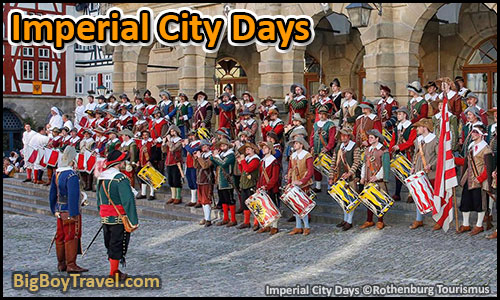
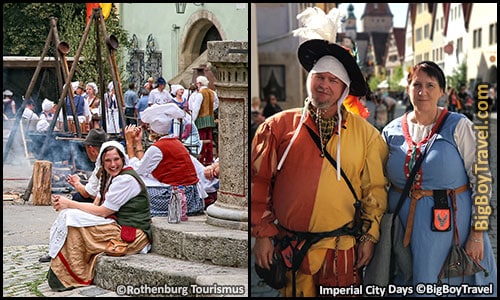
Every September since 1974, Rothenburg, Germany, has celebrated the Imperial City Days. This weekend-long festival brings you back to Rothenburg’s Medieval golden age as a city-wide Renaissance fair. The events of the weekend are strengthened by the location in one of Europe’s best-preserved Medieval towns, and with the help of nearly 1,000 costumed reenactors who take the village over for 3 days. From peasant communes to parading nobles and knights on horseback, the Imperial City Days feel like you have stepped back in time to the Middle Ages.
Having gained Free Imperial City Status on May 15th, 1274, from the King of Germany, Rudolf I (House Habsburg), Rothenburg grew into a social and economic powerhouse. Of the 4,000 towns in the Holy Roman Empire, fewer than 200 gained this status in the Middle Ages, and only 50 retained their rights for any real period of time. This helped Rothenburg become one of the largest and most important cities in the old empire, with a population of 6,000 in 1400, but it was eventually destroyed during the 30 Years’ War in 1631.
The Imperial City Days were established on the 700th anniversary of Rothenburg’s imperialization and have become one of the best celebrations in Europe. During the festival, you can experience historic plays covering the events of 1274, the Peasants’ Revolt of 1525, the Reformation, the 30 Years’ War, the Shepherds’ Dance, and their annexation by Bavaria in 1802, which ended Rothenburg’s Imperial City status. There are hands-on demonstrations, dancing, music from every corner of the village, fireworks, and our favorite event, the Torchlight Procession.
Fun Fact: The name of the Imperial City Days Festival in German is Reichsstadt Festtage (Rykes-ShtAHT Fest-taga)
Helpful Visitor Tips For The Festival:
1. Book Your Hotel Early: Weekends in popular tourist cities in Germany are normally pretty busy in early September (perfect weather season), but during the Imperial City Days in Rothenburg, the hotels fill up extra fast. This is partly because of the festival’s popularity and partly because tourists aren’t the only ones who need hotel rooms. In total, nearly 1,000 costumed reenactors from both Rothenburg and the surrounding region help make the festival possible, but they and their families also need lodging. Finding a hotel room anywhere in town at the last minute is not very common, and if you wait too long, you may find yourself staying in villages over 10 miles away, so book ahead.
Staying overnight is at the top of our Top 10 Things To Do In Rothenburg list, and we have a full list of our top hotels in Rothenburg (HERE).
2. Learn The History: There are numerous plays and reenactments throughout the weekend to learn the history of Rothenburg, but it is still important to know the background of the festival before you arrive. The overall story of the festival is to bring you back to Rothenburg’s Medieval golden age before it was frozen in time in the 1600s. The village had gained Imperial City Status in 1274, which it kept until it was annexed into Bavaria in 1802. During the Middle Ages, it was common for Imperial Cities with market rights to have large celebratory festivals or even horse races during the year to honor their status.
During the Imperial City Days today, you will be shown various parts of the town’s history, which turn Rothenburg into an even more magical place than it normally is.
- 1274 – Rothenburg gained its Free Imperial City charter, which only 50 of the Holy Roman Empire’s 4,000 cities had for a prolonged period of time.
- 1517- Shepards Dance from when they gained the privilege to throw an annual town feast.
- 1525 – Peasants’ Revolt, which led to 17 beheadings in Market Square.
- 1630 – Reformation and invasions during the 30 Years’ War.
- 1631 – Master Draught, where folklore says Mayor Nusch (Nu-sh) saved Rothenburg by chugging 3 liters of wine in one drink.
- 1802 – Annexation into Bavaria ended Rothenburg’s Imperial City status.
3. Dress For The Middle Ages: One of the best things we did before attending the Imperial City Days in Rothenburg was to buy authentic shirts and hats at our local Renaissance festival before heading to Germany. At first, we were worried about looking silly, but did it anyway, and are sooo happy we did, as we really felt more connected to the festival by dressing up.
While you will see the occasional lederhosen, you won’t see any pirate clothing as you would at an American Renaissance festival because this event focuses more on the time frame of 1274-1600s than the swashbuckling 1700-1800s. If you aren’t sure what to wear, there are plenty of local clothing stores in Rothenburg you can shop at once you arrive. We like Zur Waffenkammer (Obere Schmiedgasse 9/11, Website) the most out of all the costume stores. There is also a knight’s camp where you can try on shining armor at the Imperial City Days!
4. Get Hands-On With The Events: From pressing your own coins, to Medieval rope weaving, and groups demonstrating dances from the Middle Ages, you need to make sure you’re joining in on the fun. Much like Rothenburg itself, the festival is a living time capsule of history you have to experience hands-on.
5. Know the Daily Schedule: The schedule for the weekend-long festival remains pretty consistent each year, but you will want to check it out when you get there to make sure you don’t miss any of the big events. In the section below, we provide a guide to the major daily events you should see during the Imperial City Days in Rothenburg.
6. Explore The Village: With so many live events going on during the Imperial City Days in Rothenburg, many of the town’s regular attractions are only lightly visited. This means that you can have some of the best museums or the city wall to yourself, even when the village gets packed with festival-goers. From the Medieval Crime Museum, the Imperial City Museum, to the delightful City Wall Walk, you can find peaceful solace while you take a break from the main events.
Top Things To See At The Festival:
1. Torchlight Parade & Fireworks (Friday Evening):
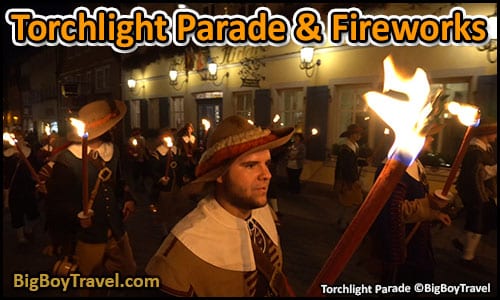
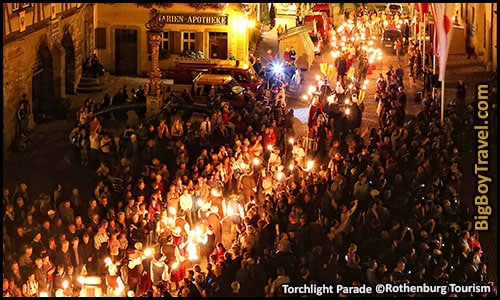
About The Torchlight Parade: If you want to feel like you are watching an amazing movie live in person, then you have to make it to the opening ceremony of Rothenburg’s Imperial City Days, known as the Torchlight Procession. The breathtaking evening parade is made up of nearly 1,000 costumed reenactors representing 30 different historic guilds marching up through town from the Tauber River Valley while carrying flaming torches.
The 90-minute parade begins around 7:30 pm at the Double Bridge, following an afternoon in which groups slowly make their way down into the valley to prepare. There are many great vantage points to watch the joyous Torchlight Parade as it makes its way up to Market Square, with the famous Plönlein Corner being one of the best. Make sure to make it to Market Square during the first half of the Torchlight Parade to get a good spot for the fireworks over the Gothic Town Hall. As each group is formally introduced to the large crowd, you will also hear many stories about Rothenburg’s time as an Imperial City, spoken in both German and English, before the stunning fireworks serve as the grand finale.
Torchlight Parade Video:
2. “Burning City” Fireworks (Saturday Evening):
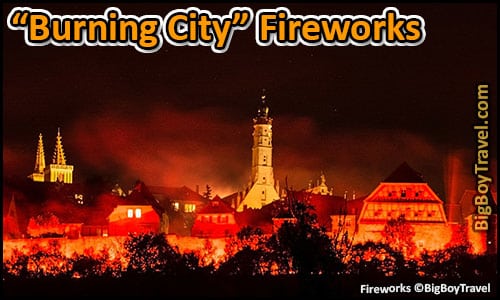
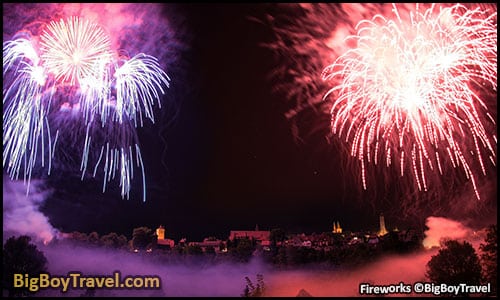
About The “Burning City” Fireworks: The larger of the two fireworks shows during the Imperial City Days in Rothenburg happens on Saturday evening over the Tauber River Valley. The brilliant fireworks show is meant to symbolize an attack on the city, followed by the city’s burning.
You can get really good views of the show from the vast Castle Garden park, but the best vantage point is from the Double Bridge, a short walk from the village in the valley. The Double Bridge is the perfect place to get a panoramic view of the town at the end of the fireworks, when torches are set every few feet along the city wall to make Rothenburg glow an eerie red as it “burns”.
3. Knights’ Camp of 1274 (All Weekend):
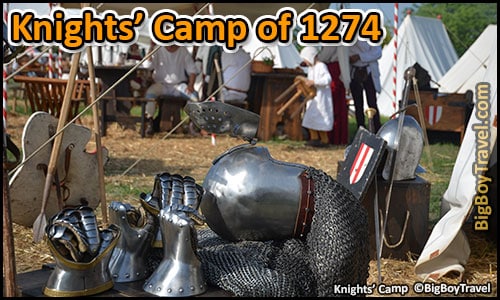
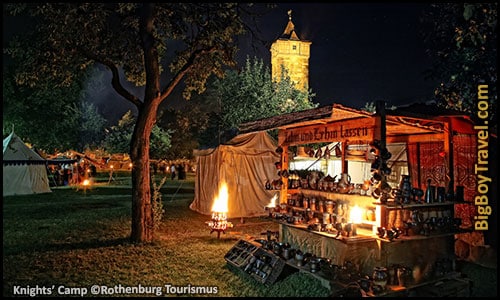
About The Knights’ Camp: Just outside the eastern side of the city walls, near the Woodsman Gate (Rödertor), is a huge tented knights camp where you can get a feel for caravan life in the year 1274. It is really cool to see the costumed folk groups go about their Medieval lives in the camp, from cooking and crafts to playing music. There are places to buy hand-made goods like clay pots or even try on real armor while you pretend to be a knight yourself. While most activities take place during the day, we especially love visiting the camp after dark. In the evening, you can watch the groups dining around long tables while they sing old-world songs by both candle and firelight. The Knights’ Camp of 1274 is magical.
There is also a second knights’ camp located inside the moat of the figure-eight-shaped Spital Bastion at the far Southern end of Rothenburg. If you haven’t already been to the delightful Infirmary Quarter (Spital), this camp is a great excuse to check it out. Many of the sights in this part of town are covered in great detail on our free Rothenburg City Wall Walking Tour.
4. Musket & Cannon Performance (Saturday Morning):
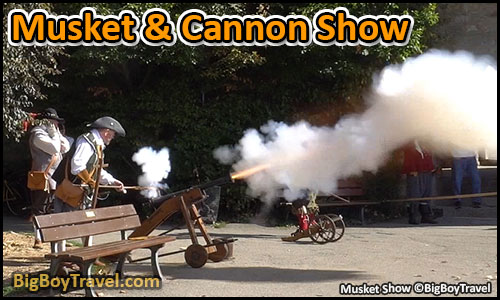
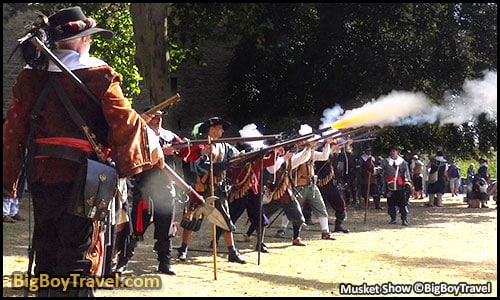
About The Musket & Cannon Performance: In Rothenburg’s Castle Garden, a special military and artillery performance takes place on Saturday morning. You’ll be able to see the reenactors shoot authentic muskets from the late Middle Ages while also demonstrating both organized battle formations and attack techniques. Toward the end of the thrilling demonstration, they even shoot off a series of large cannons toward the Tauber River Valley from the park in a booming display of power.
We find the Castle Garden setting for the military demonstration really cool, too. The large park is featured in our free Old Town Rothenburg walking tour and was once the site of the Hohenstaufen Castle, dating back to the 1100s, predating the founding of the village of Rothenburg. Conrad Hohenstaufen married the daughter of a local knight, which led him to build his castle here before he became King of Germany. King Conrad III died before he could become the Holy Roman Emperor, and the castle was used only sparingly before eventually falling into ruin. Common folklore says the castle was destroyed by an earthquake in 1356; however, it was neglect that led to the stones being repurposed for other projects.
5. Historic Plays & Music (Saturday & Sunday):
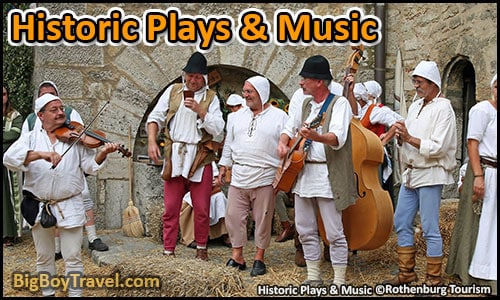
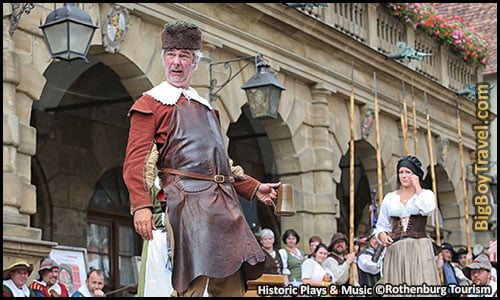
About The Historic Plays & Music: One of the first things you will notice at the Imperial City Days festival in Rothenburg is the live music filling the cobblestone streets of the village. From military regiments marching with drummers and flutes to groups of Medieval bagpipers, the live music helps to build excitement for the weekend’s events. One of the best places to watch live music is at Mark’s Tower, where a folk group plays traditional songs in German in a makeshift horse manager lined with straw. Each morning, the festival also has a public breakfast with Bavarian veal sausages and music.
In addition to the live music, there are numerous historic plays throughout the weekend, both at Market Square and in the natural bowl at the Toppler Amphitheater next to the Little Flushing Tower (Stöberleinsturm). The historical plays cover the events of 1274, the Peasants’ Revolt of 1525, the Reformation, the 30 Years’ War, the Shepherds’ Dance, and the loss of municipal independence through annexation into Bavaria in 1802.
Our favorite performance is the Shepards’ Dance (Schäfertanz), which has been celebrated in Rothenburg since 1911. The large dance presentation pays homage to 1517, when the local Shepards’ Guild gained the privilege of hosting an annual town feast. At the time, the wealthy city of Rothenburg controlled 400 square kilometers of land, encompassing 180 neighboring villages, and the main product driving the local economy was sheep wool. The dance is really cool to watch, and even more fun if you join the reenactors at the end.
The play with the most folklore is definitely the legendary Master Draught (Der Meistertrunk). While this play is only in Germany, it is still cool, and you will recognize the story from the hourly performance on the clock in the Council Drinking Hall. Folklore says that in 1631, Mayor Nusch (Nu-sh) saved Protestant Rothenburg from destruction at the hands of the troops of Catholic General Tilly during the 30 Years’ War. The legend is that the famous mayor won a wager for Rothenburg’s fate by drinking over 3 liters of Franconian wine in one gulp, known as the Master Draught. The truth of the story is that General Tilly and his 40,000 troops occupied the village for the entire Winter before leaving, badly depleting Rothenburg of its food reserves. There has been a full festival dedicated to the events of the Master Draught play every year over Pentecost (50 days after Easter) in Rothenburg since 1881.
6. Live Demonstration Stations (Saturday & Sunday):
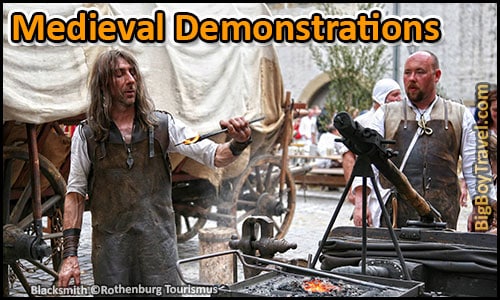
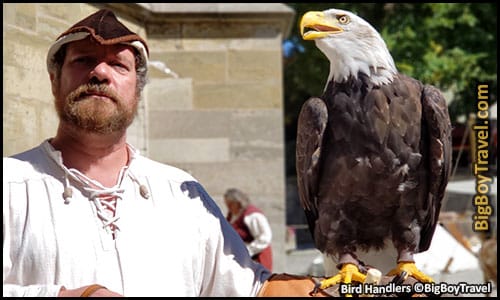
About The Medieval Demonstrations: With a focus on the Middle Ages, there is a wide range of live demonstrations held all weekend in Rothenburg during the Imperial City Days. Some of our favorite demonstrations include an authentic blacksmith, falconers with live raptors and eagles, military exercises, and opportunities to see Medieval-style cooking. We especially love the numerous hands-on demonstrations where you can press your own metal coins, weave breaded rope with authentic tools of the day, and try out interactive festival dances from the Middle Ages.
7. The Living Imperial City (All Weekend):
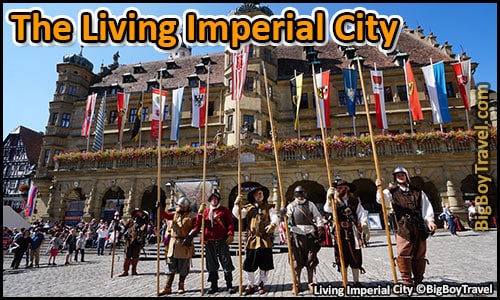
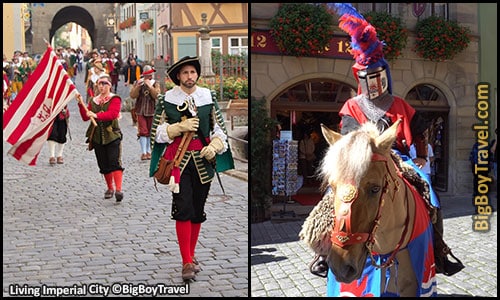
About The Living Imperial City: While this isn’t an official event, we feel that it is very important that you take time to appreciate Rothenburg as a living Imperial City during the festival. From the Medieval architecture to the communal stations of peasants going about their everyday life, even the mundane moments feel both exciting and authentic. We love roaming between the elaborate stations and feel immersed in the families of reenactors preparing meals, playing games, and singing folk songs in German. It is all of the attention to detail between the larger events that really make the Imperial City Days in Rothenburg go from fun to magical.